

The End of the Year as a Starting Point
The end of the year tends to bring a few things together at once: built-up fatigue, the urge to take stock and, above all, a change of pace. When the day-to-day noise dies down a little, something shows up that barely exists the rest of the year: time to look at how we’re really working.
It’s not about announcing big changes or reinventing everything. And it’s not about just looking back at what already happened, either. It’s a good moment to get your thoughts in order, review your processes and spot what needs adjusting before you hit the gas again. This year, one thing stands out in that exercise: how AI is being built into everyday work, and how processes and timelines are being managed so we don’t start next year in panic mode.
AI is already here. The challenge is how you use it
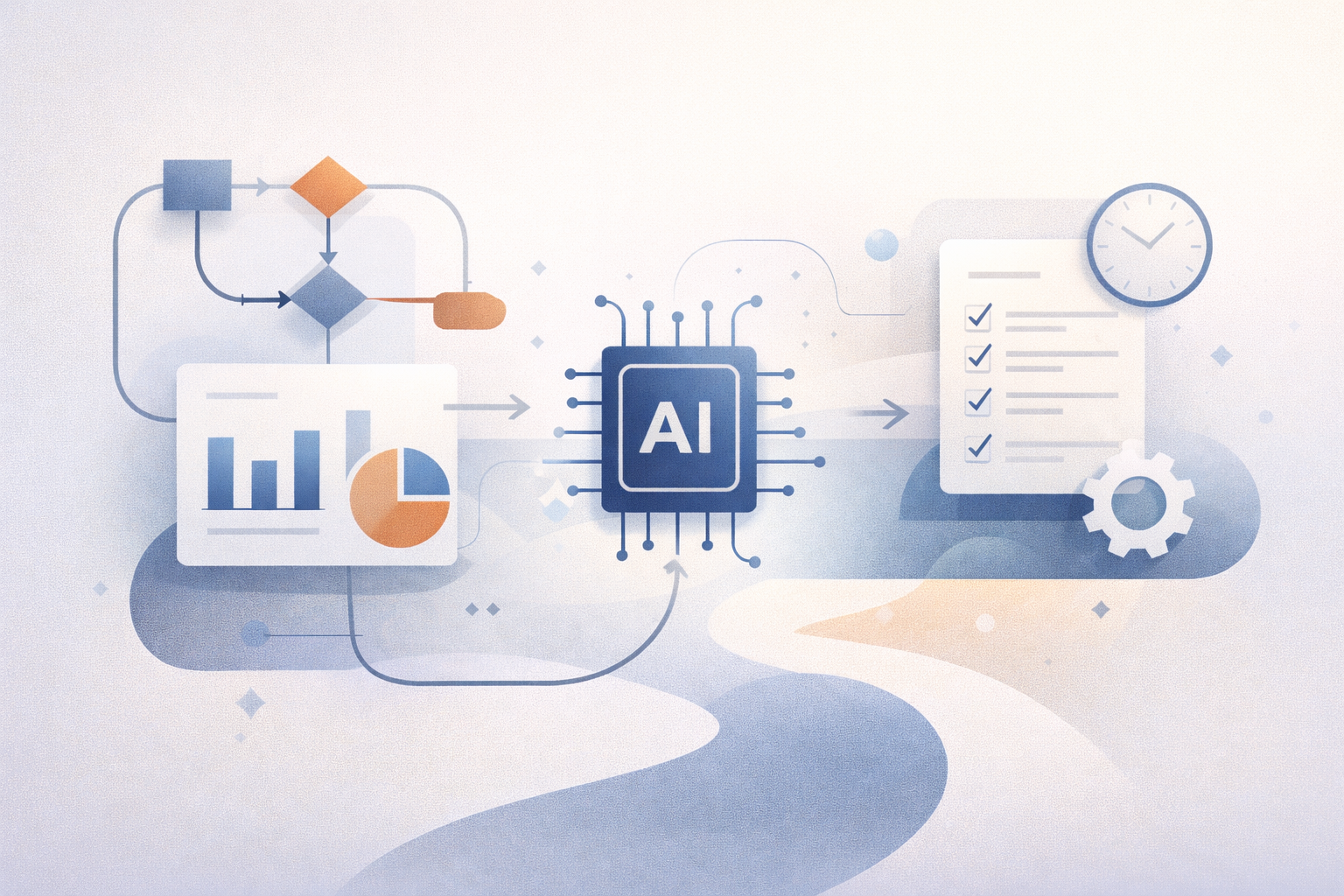
AI stopped being a novelty a while ago. It’s in our tools, platforms, workflows and internal conversations. The interesting question today isn’t whether you use it, but how you fit it into a real way of working.
On a lot of teams, adoption was fast and pretty messy. People use it to write, summarize, brainstorm and speed up tasks. All of that adds up, especially in speed. The difference from the pre-AI world is clear: today you can produce content with almost zero friction, at volumes that used to be unthinkable. The problem shows up when that speed doesn’t come with judgment. That’s when you start seeing generic copy, conceptual mistakes, off-brand content and messages that “sound good” but don’t really say much.
Using AI alone, without mixing in human thinking, design and review, usually leads to that result: content that looks right on the surface but is weak underneath. The same goes for campaigns that get thrown together fast and perform “on average”, with no clear strategic logic behind them. The tool does its job, but it doesn’t raise the bar.
The difference starts to show when AI is used as support, not as a replacement. When there’s context, clear criteria and clear limits. And when it’s built into processes that already exist, instead of forcing new ones just because the tool makes it possible. That’s when models like ChatGPT, Claude or Gemini really start to add value, not because of what they generate on their own, but because of how they speed up decisions that are still made by humans.
There’s another front that deserves more attention today: AI built into operational workflows. Forms, chats, auto-replies, assistants on websites or CRMs. These systems, often powered by LLMs, can answer fast and with total confidence and still get it wrong. When that happens, the impact isn’t just internal: it can hit your audience, your users and how people see your brand. And that cost is usually higher than any time you saved.
That’s why the focus today shouldn’t be automating everything, but being in control of what gets automated. Reviewing outputs, training models on the right information, limiting answers where needed and accepting that, for now, human oversight is still key. Not just to protect the brand, but to improve these systems based on real-world use instead of assumptions.
One exercise few people do yet, and that’s worth trying, is checking what these models say about your own brand, services or messaging. What they understand, what they repeat, what they leave out. That read is usually very revealing. It says a lot about how we’re communicating today and how clearly the message is landing out there.

When volume goes up, your processes (or the lack of them) become obvious.
Throughout the year, processes tend to take a back seat. Not because they don’t exist, but because the ones that exist stay put, and the ones that don’t rarely change mid-stream. You keep moving forward with what you’ve got. The system may be more or less tidy, more or less informal, but it works. Until it doesn’t.
When volume goes up, your processes, or the lack of them, become obvious. Bottlenecks, dead time and unnecessary back-and-forth start to show. These problems usually aren’t intentional. They happen because it’s not clear who decides what, at what stage or based on what criteria. And that’s when work starts getting stuck in places nobody noticed before.
A tricky spot in marketing is the balance between structure and red tape. Approvals are necessary, and chains of command exist for a reason. The problem is when that structure turns into a roadblock: decisions nobody ever finalizes, meetings where everyone weighs in but nobody signs off, tasks that sit on hold because it’s not clear who has the final say. In those spaces, work doesn’t move forward, and nobody wants to stick their neck out to get it unstuck.
You see this a lot when marketing works as an extended or outsourced team. It’s not just about delivering services, but about plugging into internal dynamics that already exist. In those cases, part of the job is helping bring order, defining clear roles without adding unnecessary layers, and keeping red tape from becoming a roadblock to growth.
You have to figure out where time is being lost, which decisions could be made earlier, which tasks currently depend on specific people and which ones could lean more on automations or assistants, human or AI (ha), without losing control or judgment.
For those of us who lead teams or departments, it means asking concrete questions about how decisions get made, where time gets lost and how much of the work depends too heavily on key people. For teams, it’s usually a chance to put real friction on the table: processes that don’t scale, approvals that stall or tools that get used with no shared criteria. The whole point of adding tools is to improve the work, and the time, of the people doing it.
It’s not about finding instant answers or changing everything overnight. It’s about figuring out what’s worth reviewing now, while things slow down a bit, so you don’t start from panic mode again when volume picks up. Thinking it through with time lets you test, adjust and get organized. Rushing to define everything almost always ends up costing more.